Reflections from IPPS9
Landing in Accra
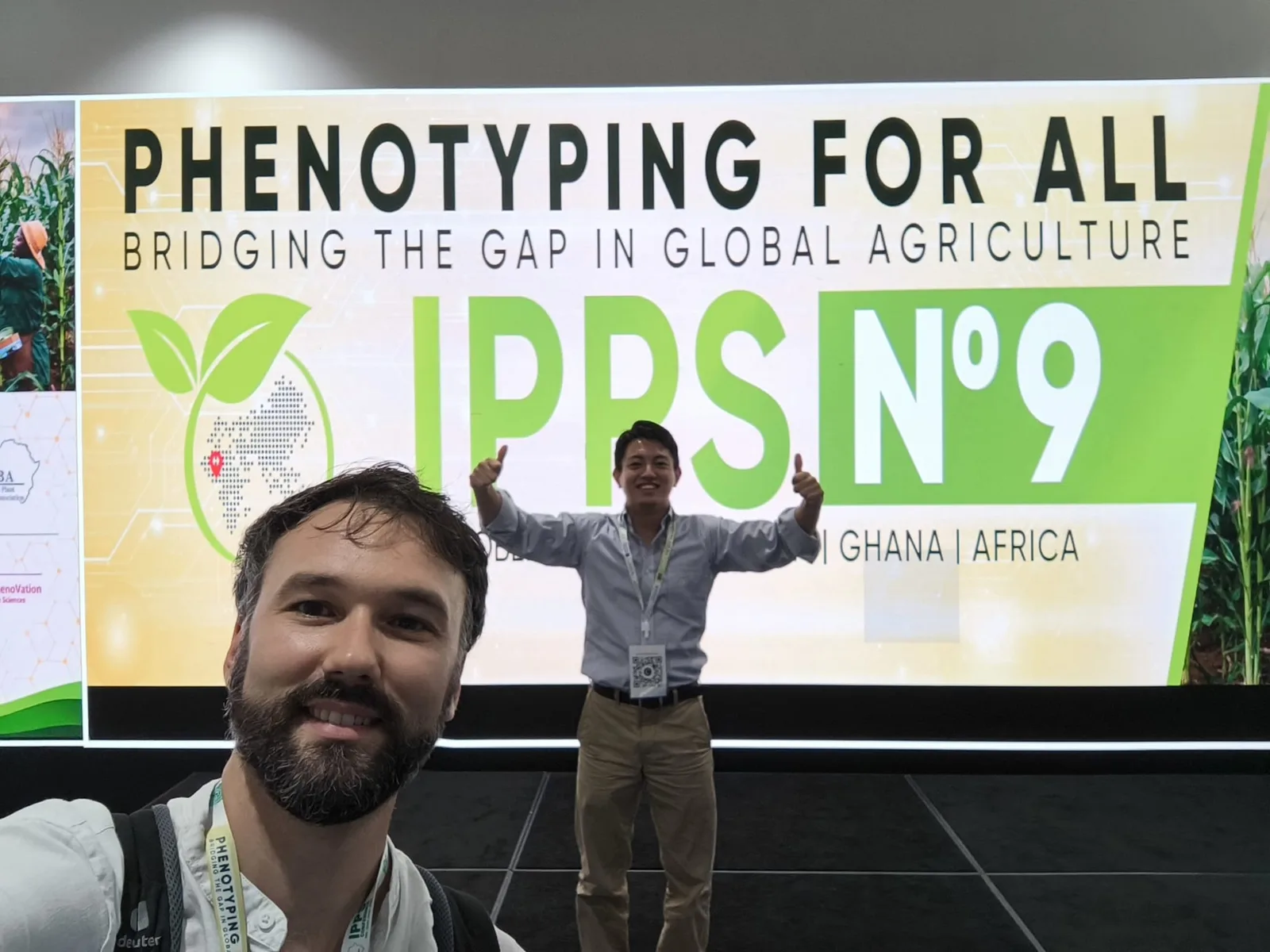
From 12 to 16 October 2026, I travelled to Accra, Ghana, with my colleague Yuma for the 9th International Plant Phenotyping Symposium, IPPS9. For the first time, the symposium was hosted on the African continent, a significant milestone. The theme, "Phenotyping for All, Bridging the Gap in Global Agriculture," was not simply a slogan. It reflects the ambition to move plant phenotyping beyond the lab and deliver ready-to-use solutions supporting the development of climate-resilient crops that can face the real challenges ahead. A special thank you to the organisers for the remarkable effort of making this happen.
The Problem We Came to Present
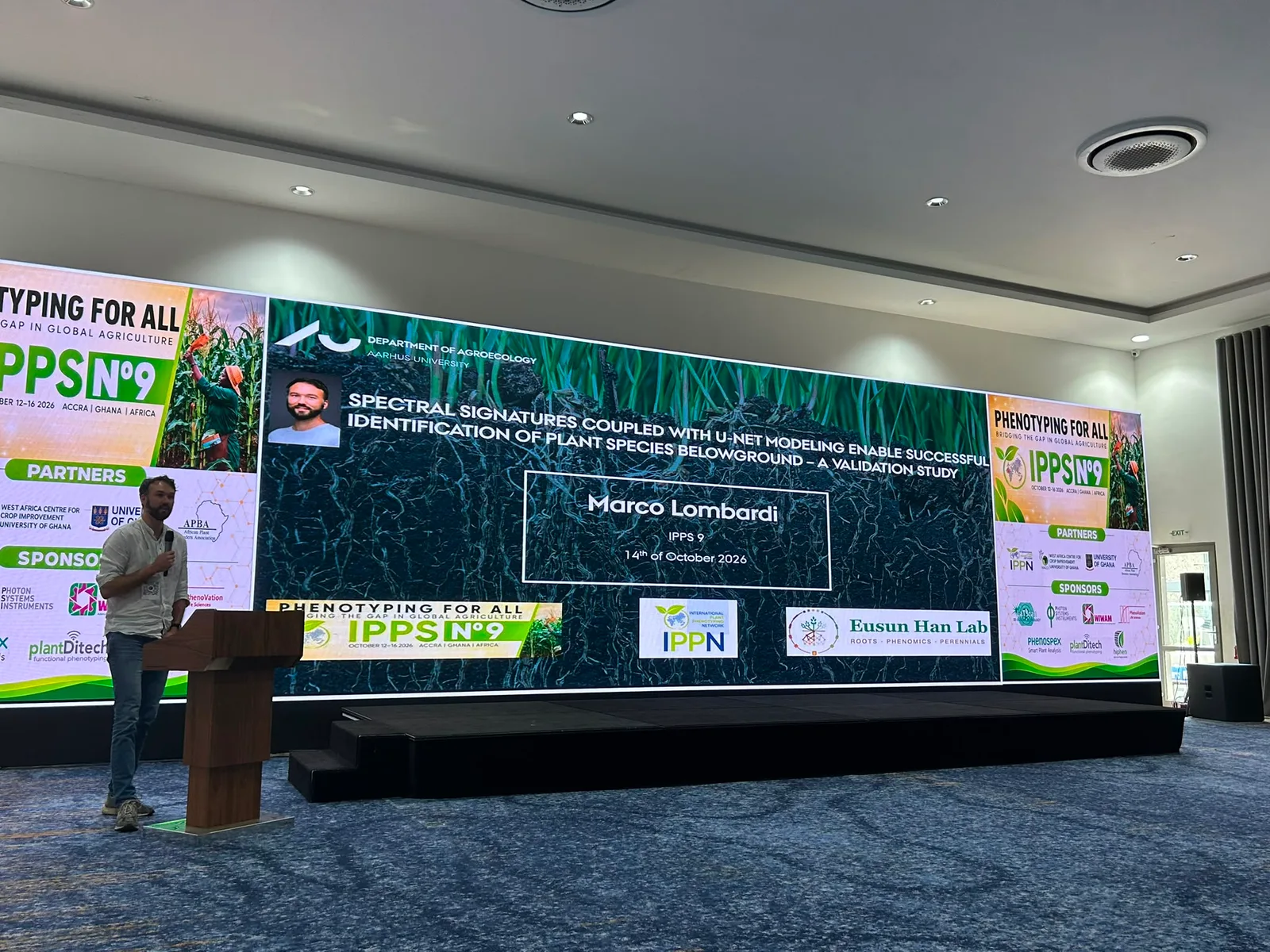
Our research abstract was selected to give a talk on a challenge that anyone working with mixed plant communities knows well. When you grow multiple species together in a mixture, whether an intercrop or a grassland, how do you differentiate their root? Roots are the hidden half of the plant, and yet they hold the key to understanding how species share soil space and resources, a concept we call belowground complementarity. Non-destructive, high-throughput root phenotyping in situ is exactly the kind of tool that can unlock this. It allows us to study living root systems without pulling them out of the ground, at a scale that makes real field comparisons possible. This is what we have been building and refining over the past three years at Aarhus University, and IPPS9 was the right stage to share it. IPPS9 was explicitly designed to bridge high-tech innovation with the practical realities of African agro-ecologies, fostering a mutual exchange of knowledge to make plant phenomics a scalable engine for food security across the continent and beyond. Presenting offered a chance to contribute to a broader dialogue on ensuring the next generation of phenotyping tools is both scientifically rigorous and locally impactful.
A Collaborative Achievement
Our work is the result of a collaborative effort across different sections within the Department of Agroecology at Aarhus University, as well as international universities. I am honoured to have represented our team at IPPS9, and a sincere thank you goes to Eusun Han for supporting my attendance and to all colleagues who contributed to pulling these results together.
What Stays With Me
Ghana left a mark that goes well beyond my own talk. Accra offered a warm and welcoming stage offering engaging discussion with leading scientists about the most pressing agricultural challenges we face. The programme was rich, covering topics from molecular and ecosystem-scale phenomics, to field phenotyping under climate extremes, digital twins, root phenomics, AI-driven approaches, and the role of public-private partnerships in delivering impact at scale. The talks reinforced just how much knowledge is still being built, and how much collective effort will be needed to ensure that phenotyping science plays its full part in the green transition.